
To maintain temperature and humidity control of raw materials and products in the biotech and pharmaceutical industries, air conditioning must be used for extended periods in plant buildings and warehouses, leading to relatively high electricity consumption. To reduce energy use and improve the utilization of renewable energy, our installed capacity of green electricity (solar photovoltaics) already exceeded 10% of Taipower's contracted capacity (7,500kW) in 2024. In addition to continually assessing various renewable energy options and participating in the operation of Taipower's virtual power plant standby capacity, we plan to achieve over 1% energy savings each year. This aims to strengthen our resilience against climate change and lower operational risks. In recent years, as business turnover and production capacity steadily grew, overall energy consumption increased. However, by implementing multiple energy-saving measures, we managed to achieve an average annual energy-saving rate of 1.71% from 2015 to 2024.

▼Energy-Saving Performance of Formosa Laboratories Over the Past Three Years

Notes :
- Average annual electricity savings rate: The statistical scope refers to the average electricity-saving rate over the period from 2015 to 2024.
- Data source : Data registered and declared on the network of Industrial Energy Efficiency and Conservation
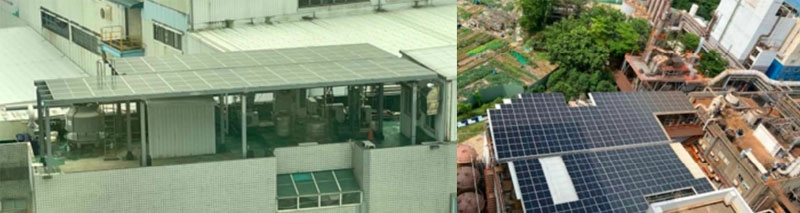
Solar power generation system
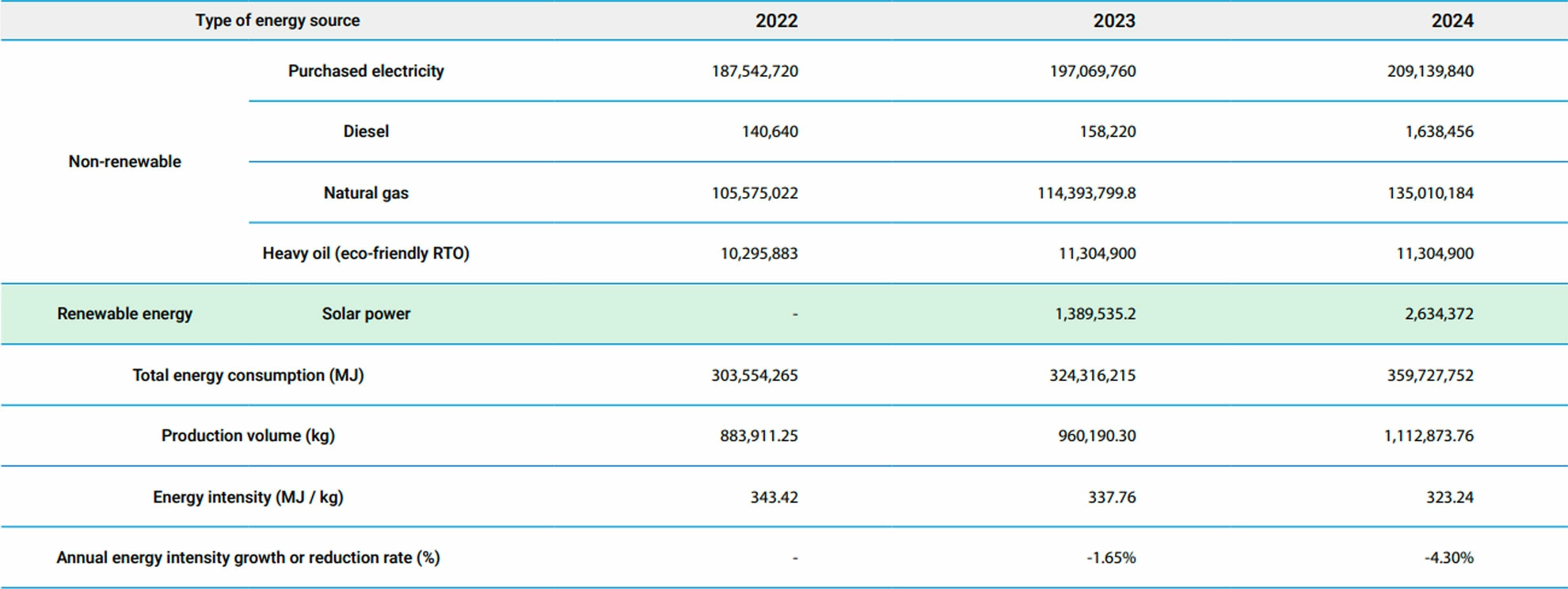
In 2024, Formosa Laboratories used a total of 359,727,752 MJ of energy, with renewable energy making up 0.73%. The company reported an energy intensity of 323.24 MJ per kg, calculated based on production volume in kilograms. Despite increased electricity consumption due to plant expansion and higher production capacity, this figure remained lower than in previous years.
▼Use of energy sources within the organization (Unit: megajoules or MJ)
Note:
- The scope of the energy survey covers the entire area of the office premises at Formosa Laboratories' headquarters, Luzhu Plant, and Luzhu No. 2 Plant.
- The energy conversion factors were taken from the Greenhouse Gas Emission Factor Management Table Version 6.0.4 published by the Ministry of Environment, where 1 cubic meter of natural gas - 10.5 kWh of electricity; 1 liter of diesel = 8,400 kcal = 35.16 MJ; 1 kWh of electricity= 3.6 MJ; 1 liter of heavy oil = 41.87 MJ.
- There was no data on solar power in 2022 because electricity generation using solar energy only started at the end of June 2023.